


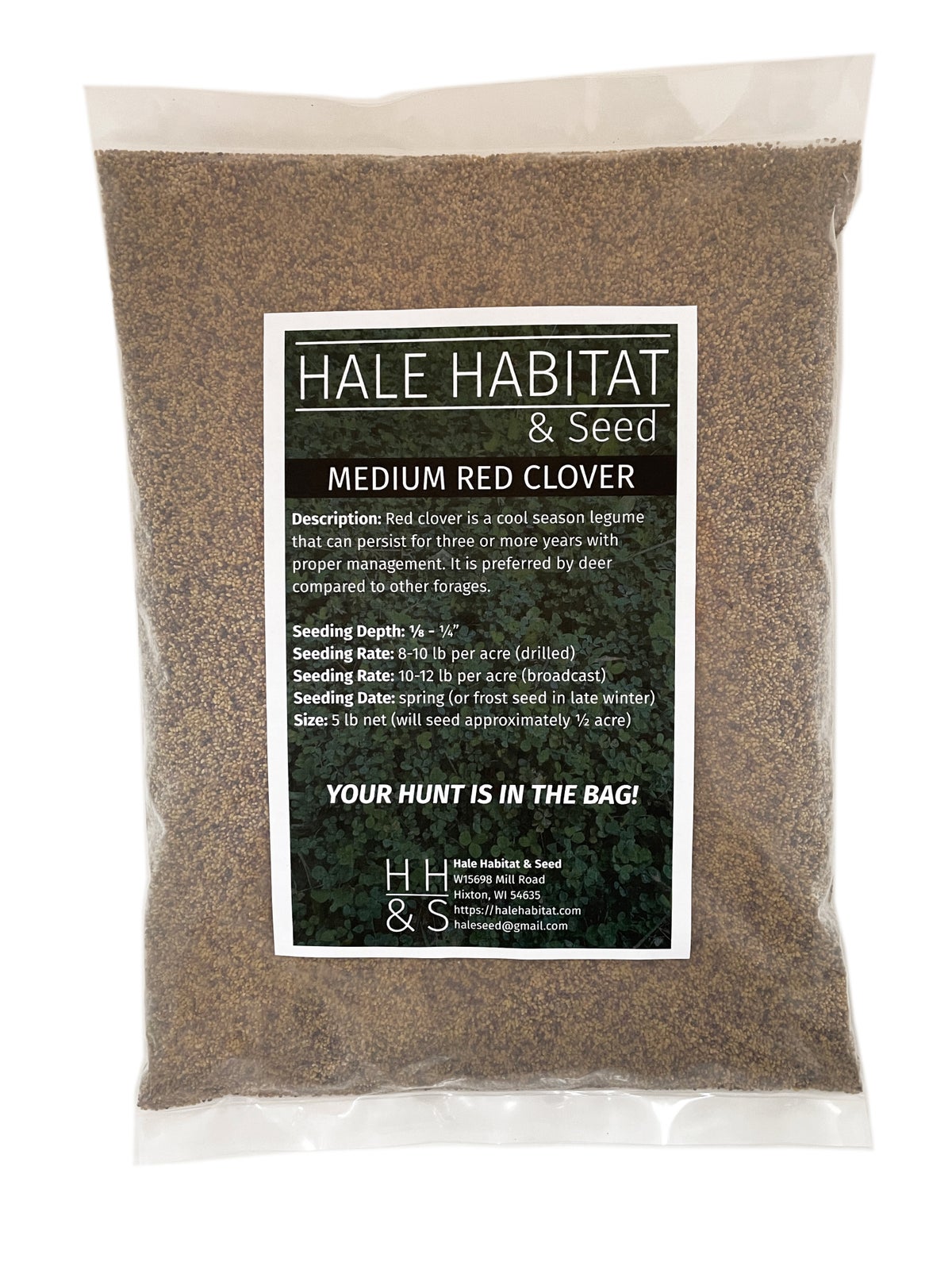
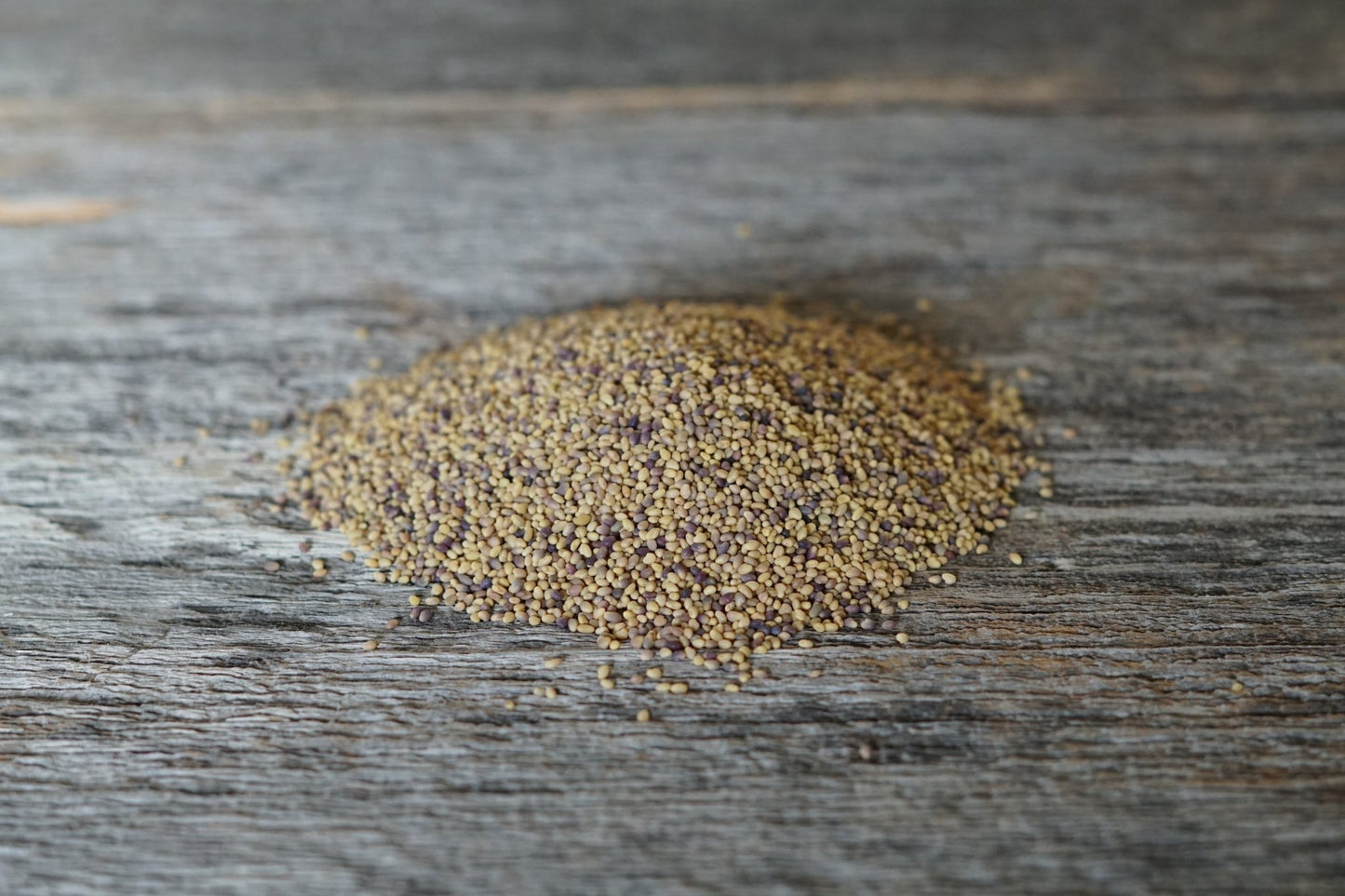
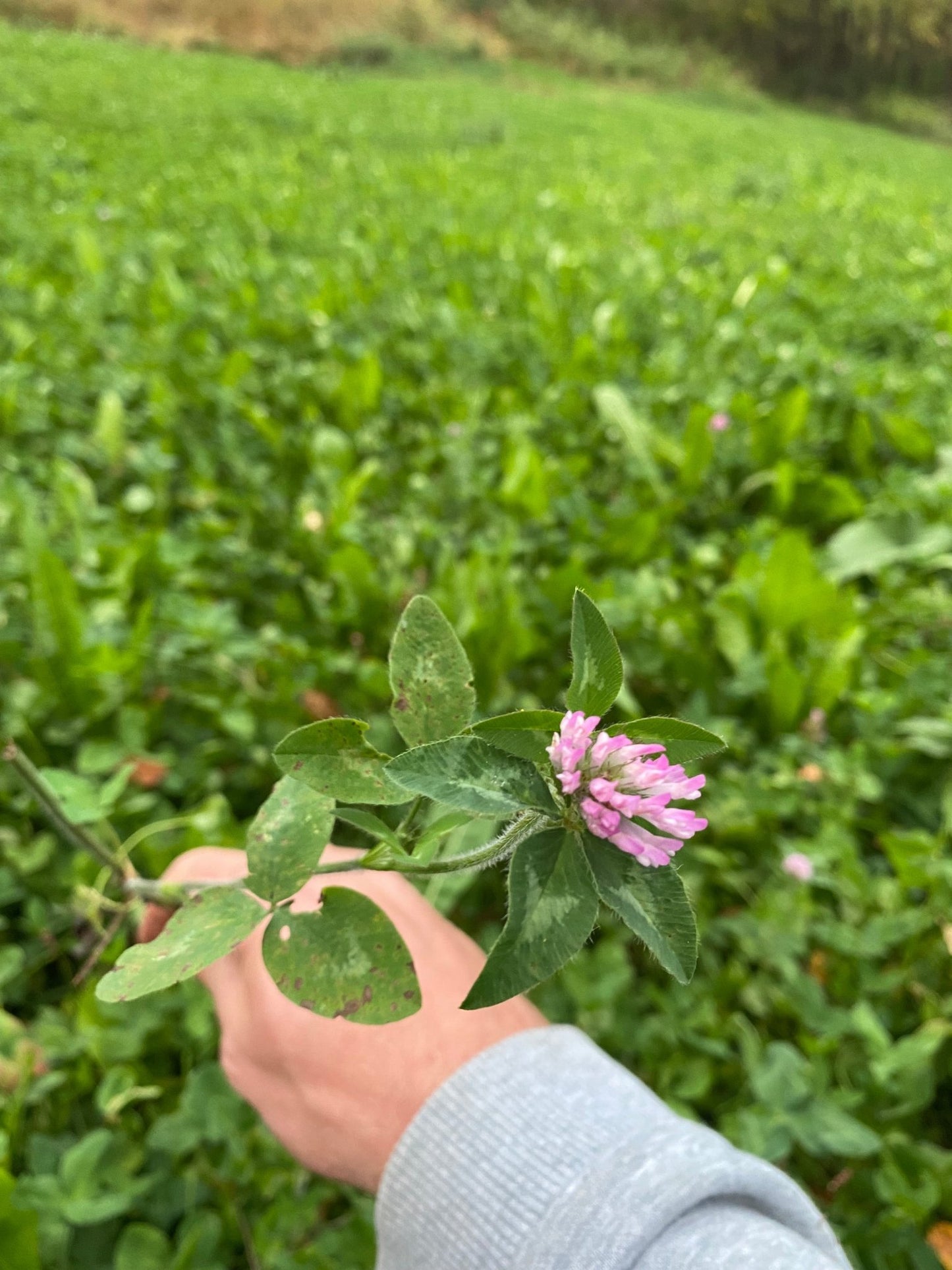
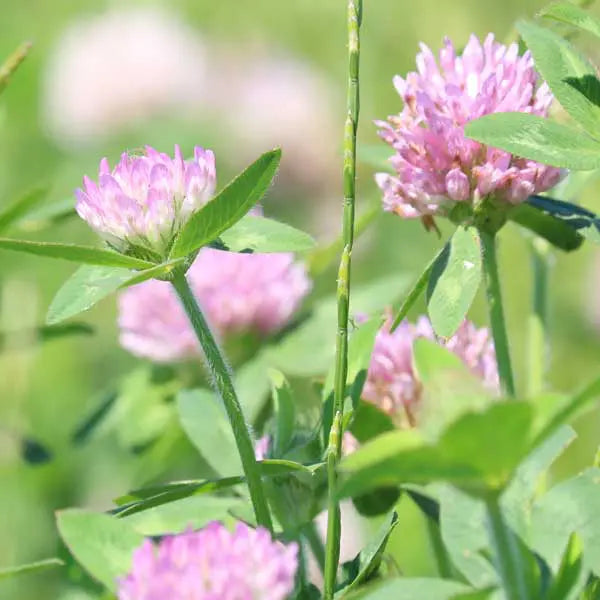
Medium red clover (Trifolium pratense) is a perennial legume commonly used for forage, soil improvement, and wildlife food plots. It provides high-protein forage for deer, rabbits, and other wildlife while also serving as a nitrogen-fixing cover crop to improve soil health. Inoculated with a NOP compliant seed treatment for maximum germination.
Benefits for Wildlife
✔ High-protein forage for deer, turkey, and pollinators.
✔ Nitrogen-fixing properties enhance soil fertility.
✔ Attracts bees and beneficial insects as a strong nectar source.
✔ Regrows after grazing or mowing, providing continuous forage.
Planting Guidelines for Medium Red Clover
-
Planting Times:
- Spring (March–May) – Best for establishing a strong stand.
- Fall (August–October) – Allows early root development before winter.
- Frost Seeding (January–March) – Can be broadcast over frozen ground for natural soil incorporation.
-
Seeding Depth:
- ¼ to ½ inch deep – Shallow planting is crucial for germination.
-
Seeding Rates:
- Drilled: 8–12 lbs per acre in a well-prepared seedbed.
- Broadcast: 12–15 lbs per acre, ensuring good soil contact.
-
Days to Maturity:
- 60–90 days for full establishment, with peak production in the second year.
-
Drought Tolerance:
- Moderate – Can withstand short dry periods but performs best with adequate moisture.
-
Saturated Soil Tolerance:
- Moderate – Tolerates temporary wet conditions but not prolonged flooding.
-
Shade Tolerance:
- Moderate – Prefers full sun but grows in partial shade.
Fertilization Guidelines for Medium Red Clover
- Soil pH: 6.0–7.0 is ideal for maximum nitrogen fixation and productivity.
-
Nitrogen (N):
- Minimal nitrogen required due to its nitrogen-fixing ability.
-
Phosphorus (P) & Potassium (K):
- Apply 30–60 lbs P₂O₅ and 40–80 lbs K₂O per acre based on soil tests.
-
Lime Application:
- If soil pH is below 6.0, apply lime to adjust acidity before planting.
Fertilization Timing:
- Apply phosphorus and potassium at planting and annually based on soil tests.
- Avoid excessive nitrogen, as it reduces the clover’s nitrogen-fixing benefits.
Herbicide Use for Medium Red Clover
-
Weed Management:
- Effective weed control is critical during establishment to reduce competition.
-
Pre-emergence Herbicides:
- Metribuzin – Provides early broadleaf weed control.
- Pendimethalin (Prowl H₂O) – Controls annual grasses without harming clover.
-
Post-emergence Herbicides:
- Clethodim (Select Max) – Controls unwanted grasses without harming clover.
- 2,4-DB (Butyrac 200) – Controls broadleaf weeds with minimal clover impact.
- Imazethapyr (Pursuit) – Can be used for selective weed control.
Key Considerations:
- Mowing helps suppress weeds in early growth stages.
- No-till planting into existing residue can reduce weed pressure.
- Avoid using 2,4-D, as it may harm red clover stands.