
Skip to product information
1 of 9

Hale Habitat & Seed

Daikon Radish

Daikon Radish

Regular price $29.99 USD
Regular price Sale price $29.99 USD
Sale Sold out
Shipping calculated at checkout.

FREE SHIPPING!

Non-GMO
Size
Quantity
View full details

Daikon Radish Seed

Cold-Season Attraction. Soil-Building Performance.

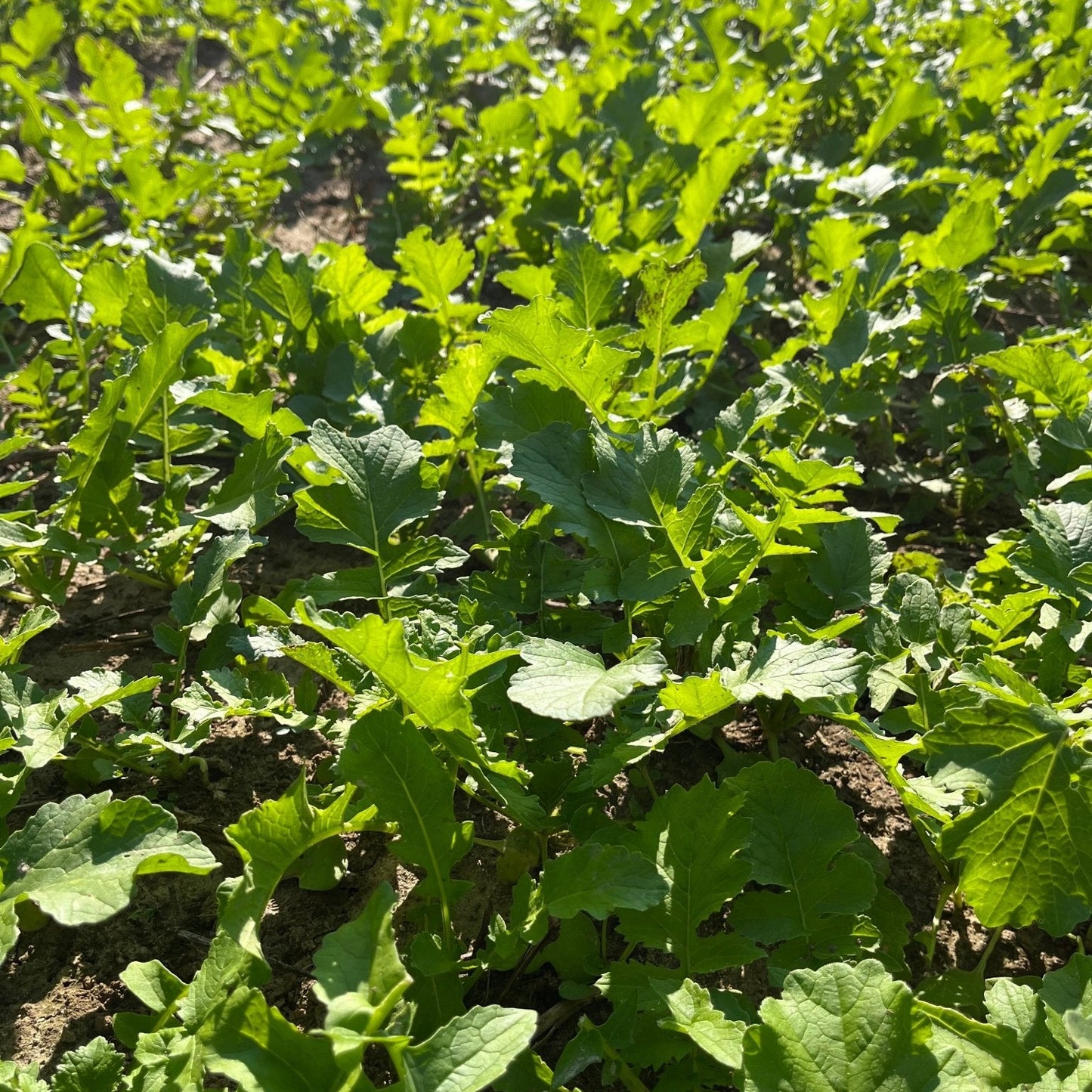
Hale Habitat & Seed’s Daikon Radish Seed (Raphanus sativus) is a powerful cool-season brassica designed to attract deer while dramatically improving soil health. Known for its large, penetrating taproot, daikon radish breaks up compacted soils, scavenges nutrients, and creates ideal conditions for future plantings.

Above ground, lush leafy growth provides highly attractive early-season forage. Below ground, the energy-rich tuber becomes increasingly desirable after frost as starches convert to sugars — making it a late-season draw when other food sources decline.

Whether planted alone or as part of a fall blend, daikon radish delivers both immediate wildlife attraction and long-term soil benefits.

Plant it for the deer. Keep it for the soil.

Benefits for Wildlife

  • Highly attractive fall forage for deer
  • Becomes sweeter and more palatable after frost
  • Provides both leafy forage and energy-rich tubers
  • Excellent early bow-season attraction
  • Supports herd health during nutritional stress periods
  • Can serve as a companion crop in brassica or grain blends

Planting Guidelines

  • Seeding Rate:
    • 5–8 lbs per acre (broadcast)
    • 3–5 lbs per acre (drilled)
  • Planting Depth: ¼–½ inch
  • Best Planting Window:
    • Late summer to early fall
    • Plant 6–10 weeks before first frost
  • Soil Prep:
    • Firm, clean seedbed recommended
    • Good seed-to-soil contact is critical
  • Sunlight: Full sun preferred
  • Moisture: Performs best with adequate fall moisture

Fertilization Guidelines

  • Conduct a soil test prior to planting
  • Ideal soil pH: 6.0–7.0
  • Brassicas respond well to nitrogen
  • Apply 40–60 lbs of nitrogen per acre at planting (per soil test recommendations)
  • Adequate phosphorus (P) and potassium (K) improve root and leaf development

Herbicide Guidelines

  • Use glyphosate or approved burndown herbicide prior to planting
  • Ensure complete weed control before establishment
  • Avoid broadleaf herbicides post-emergence (radish is a broadleaf plant)
  • Grass-selective herbicides may be used if labeled for brassicas
  • Early weed competition can reduce bulb development

Frequently Asked Questions

When should I plant Daikon Radish?

Plant 6–10 weeks before your average first frost date. In most regions, this means late summer to early fall to allow proper leaf and tuber development before cold weather.

How much seed do I need per acre?

Broadcast at 5–8 lbs per acre or drill at 3–5 lbs per acre. Avoid overseeding, as overcrowding can reduce bulb size.

How deep should I plant it?

Plant at a depth of 1/4–1/2 inch. Ensure good seed-to-soil contact for proper germination.

Why is Daikon Radish good for deer?

Daikon radish provides highly attractive leafy forage early in the season. After frost, the tubers convert starches to sugars, increasing palatability and late-season attraction.

Will deer eat the bulbs?

Yes. Deer consume both the leafy tops and underground tubers, especially after frost when sugar content increases.

Does Daikon Radish improve soil health?

Yes. Its deep taproot helps break up soil compaction, improve water infiltration, and recycle nutrients. As the plant decomposes, it adds organic matter back into the soil.

Does it require fertilizer?

Yes. Daikon radish responds well to nitrogen. Apply fertilizer based on soil test recommendations, ensuring adequate nitrogen for strong leaf and bulb development.

Can I mix Daikon Radish with other seeds?

Yes. It pairs well with other brassicas, cereal grains, and fall annual blends and can be used as part of a soil-building rotation strategy.

Can I spray weeds after it emerges?

Use caution. Daikon radish is a broadleaf plant, so broadleaf herbicides will damage it. Grass-selective herbicides may be used if labeled for brassicas. Always follow herbicide label directions.

  • Planting Tips

    These tips provide a straightforward guide to successful habitat planting, including soil prep, seeding techniques, weed control, and long-term maintenance to help ensure strong germination and healthy growth.

    Planting Basics 
  • How much do I need?

    This guide shows recommended seed rates (in pounds per acre) for various food plot crops when broadcasting or drilling, helping you plant at the right density for better growth and wildlife attraction.

    Seeding Rate Guide 
  • Custom Blends

    The Custom Seed Mix Calculator page offers an interactive tool to build and calculate your own seed blend by selecting planting method, seed types, and mix proportions, then estimating pounds per acre and total seed needed.

    Seed Mix Calculator